


Sounds consist of acoustic waves that are collected by the outer ear and amplified by the inner ear. Hearing is one of the most crucial of the five sensory organs since it allows us to communicate with the auditory world. Individuals with hearing problems should undergo a complete hearing evaluation.
Hearing evaluation, also known as audiological evaluation, involves tests performed by an audiologist to provide information on the following:
- Is a hearing loss present?
- Which frequencies (or pitches) are affected?
- How severe the hearing loss is?
- What is the type of hearing loss?
Patients referred for evaluation, diagnosis, or treatment receive a test battery that includes:
- Play audiometry (up to 3 years of age)
- Pure tone audiometry (3 years and above)
- Immittance audiometry
- Tympanometry
- Acoustic reflex audiometry
- Eustachian tube function test
- Auditory Brainstem Response (ABR) / Brainstem Evoked Response Audiometry (BERA)
- Otoacoustic Emissions (OAE)
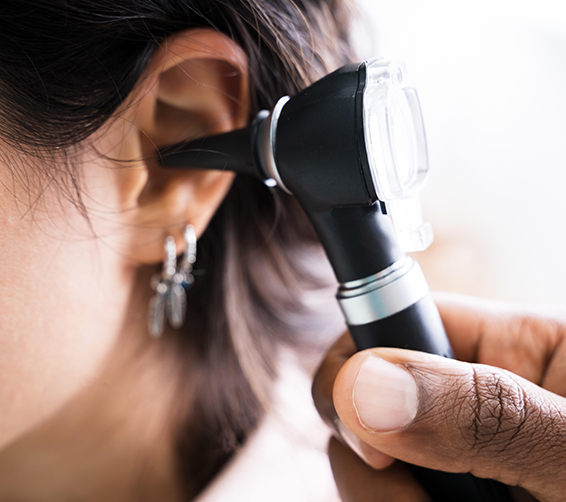
The evaluation will also include recommendations from the audiologist regarding the choice of hearing aid for the patient.
- Oto Acoustic Emissions (OAE): Audiology Site Otoacoustic Emissions (OAE) is used as a screening tool for hearing in neonates or new born children. OAE test is very useful for the assessment of hearing defects in newborn babies and in children who are too young to cooperate in conventional hearing tests.
- Brainstem Evoked Response Audiometry (BERA): BERA is an objective test. In this test, evoked potentials in brain and the auditory pathway are collected from ongoing electrical activity with the help of electrodes placed over the scalp. BERA is used for newborn hearing screening, auditory threshold estimation, intraoperative monitoring, determining hearing loss type, degree, and auditory nerve and brainstem lesion detection.
- Immittance Audiometry (IA): IA is a measurement of the middle ear functions. It provides information about the movement of eardrum, status of middle ear and type of hearing loss.
- Pure tone Audiometry (PTA): PTA is a subjective test, used for the assessment of the Hearing Sensitivity of an Individual. It provides information about the hearing sensitivity in terms of the Degree and Type of the hearing loss.
The Department of Speech Therapy at Poona Hospital & Research Centre caters to individuals experiencing communication difficulties. The department has skilled professionals who assist in overcoming challenges related to speech, language, and basic communication skills.
- Delay in acquisition of speech and language
- Unclear or unintelligible speech
- Fluency-related issues (e.g., primary hesitancy, stammering)
- Children with special needs (e.g., hearing impairment, autism, cerebral palsy, intellectual disabilities, developmental delays)
- Children with neurological conditions
- Children with learning differences
- Children with cleft lip and/or palate
- Voice-related issues


Dr. Vandana Joshi
Education: M.S. (E.N.T)
Specialties: ENT
Dr. Amol Deshpande
Education: M.S (ENT)
Specialties: ENT
Dr. Poorva Lunawat
Education: MBBS, DORL, DNB(Otorhinolaryngolgy)
Specialties: ENT